
Top 8 Greenly Alternatives for Carbon Reporting
Quick Summary: Greenly is a recognisable name in carbon reporting, but it isn't the right fit for every business. If you need a platform that's genuinely easy to use, produces audit-ready results, and comes backed by hands-on expert support — there are better options out there. We've rounded up the 8 strongest alternatives, with Emerald Power leading the pack as the standout choice for Irish and UK SMEs and mid-market companies who need accuracy without the complexity.
If you've been evaluating Greenly and found yourself wondering whether there's a more practical, more accurate, or better-supported alternative — you're not alone. A growing number of businesses, particularly SMEs and mid-market companies under increasing pressure from CSRD, investor reporting requirements, and supply chain due diligence, are outgrowing what Greenly can offer or looking for something more tailored to their reality.
This guide walks you through eight Greenly alternatives worth considering in 2025, what each platform does well, where it falls short, and who it's really designed for.
Why Trust Us?
We haven't just read the marketing pages. At Emerald Power, we've spoken to hundreds of users across different carbon reporting platforms — finance directors, sustainability leads, operations managers, and CFOs — to understand what works in practice and what creates friction.
We've also sat on demos of these platforms ourselves. As we've built and refined Emerald Power, we've made it our business to understand exactly what competing tools offer, how they handle complex data, and where they leave users without adequate support. That hands-on perspective shapes every comparison below.
Our goal is simple: help you make a confident, well-informed decision. Not to push any platform for its own sake, but to be honest about what each tool actually delivers — and who it genuinely serves.
Why Consider a Greenly Alternative?
Greenly is a recognisable platform in the carbon accounting space, and for some businesses — particularly those just starting out with GHG reporting — it can be a workable first step. But as reporting requirements grow more complex, auditors ask harder questions, and regulatory pressure increases, a number of consistent limitations have emerged in real user feedback across G2, Capterra, and Software Advice.
Here's what users are actually saying.
1. Data accuracy issues that require significant internal verification
One Compliance Director at a retail business reviewing Greenly on Capterra noted that "strong internal verification was necessary, as several mistakes could have slipped into our GHG inventory — something we had not anticipated." They added that "at times, it felt as though the team lacked either the experience or the bandwidth needed to deliver fully reliable outputs."
An ESG Manager in the food and beverage sector went further, flagging specific technical problems: they reported "inconsistencies such as positive amounts not being included in totals, incorrect currency handling, duplicate data, and categories inconsistently assigned emissions."
For businesses producing reports that will face scrutiny from auditors, banks, or investors, this kind of uncertainty in the underlying data is a serious concern.
2. Inflexible reporting that can't be tailored to your needs
Across both G2 and Capterra, limited reporting customisation is one of the most frequently cited frustrations. G2 reviewers flag that "limited flexibility in reporting customisation hinders their ability to tailor the software to specific needs," and that "inadequate reporting customisation limits their effectiveness, especially for newcomers needing clearer guidance on carbon reporting modules."
One Capterra reviewer put it plainly: "There is only one area where Greenly falls short: reporting. The pre-built reports are not customisable and only include the most basic" information. For businesses with evolving stakeholder requirements — whether that's investor reporting, bank financing, or CSRD compliance — a rigid reporting structure quickly becomes a bottleneck.
3. Pricing that is difficult to justify at SME scale
Multiple G2 reviewers note that "the pricing structure of Greenly becomes challenging for businesses trying to scale up operations and for startups with limited budgets." With entry-level pricing starting at around $1,950 per user per year, the cost-to-value ratio is a recurring concern among smaller businesses who don't need enterprise-level features but are paying enterprise-level prices.
4. A steep learning curve for new users
G2 reviewers note that "the advanced features in Greenly require users to master different learning stages before achieving total functionality," and that "many of the modules are not sufficiently clear for people who have just begun working on carbon reporting — without the help of the support team, users would struggle."
For businesses without a dedicated sustainability team, being reliant on external support to navigate the platform day-to-day isn't a sustainable setup.
5. Software bugs and time-consuming workarounds
Users on G2 report that "software bugs lead to errors, data inconsistencies, and unclear module instructions," and flag that "re-entering fees in templates is tedious and time-intensive." One Capterra reviewer noted that "on some occasions, after a long time using the program, some inconsistencies can be found in certain calculations — and when the problem repeats, it becomes something the creators of the program should consider."
6. Accuracy is only as good as your data input — with limited guidance on getting it right
One reviewer flagged a fundamental limitation: "the accuracy of the data generated by Greenly depends on the quality and quantity of information entered by the company — if the data is wrong or incomplete, the reports may not accurately reflect the actual environmental impact." Plenty of platforms share this challenge, but the difference is in how much guidance and support is provided to get the inputs right from the outset. Several users feel Greenly leaves too much of that responsibility with the customer.
The Top 8 Greenly Alternatives at a Glance
| Platform | Best For | Ease of Use | Audit-Ready Accuracy | Expert Support | SME / Mid-Market Fit |
| Emerald Power (Top Pick) | SMEs and mid-market companies | Excellent | GHG Protocol-aligned & audit-ready | Dedicated expert team | Purpose-built |
| Normative | Science-led mid-market teams | Good | TÜV SÜD verified | Climate advisors available | Good fit |
| Sweep | Collaborative teams & larger orgs | Good | Strong data integrity | Onboarding support | Leans enterprise |
| Watershed | Data-heavy large organisations | Moderate | Enterprise-grade | Specialist support | Enterprise-skewing |
| Plan A | European mid-to-large companies | Good | TÜV Rheinland certified | Dedicated accountants | Mid-market viable |
| Persefoni | Financial services & enterprise | Complex setup | Financial-grade audit trail | Enterprise support | Not SME-oriented |
| Coolset | European mid-market CSRD compliance | Good | TÜV certified | Good support | Good fit |
The 8 Best Greenly Alternatives in 2026
1. Emerald Power
Our Top Pick
Best for: SMEs & mid-market companies that need accuracy, simplicity, and expert backup
If you've landed on this page searching for a Greenly alternative that actually works for a business like yours — one that isn't an enterprise behemoth with a six-month onboarding process, but also isn't a basic spreadsheet dressed up with a dashboard — Emerald Power is the answer worth looking at first.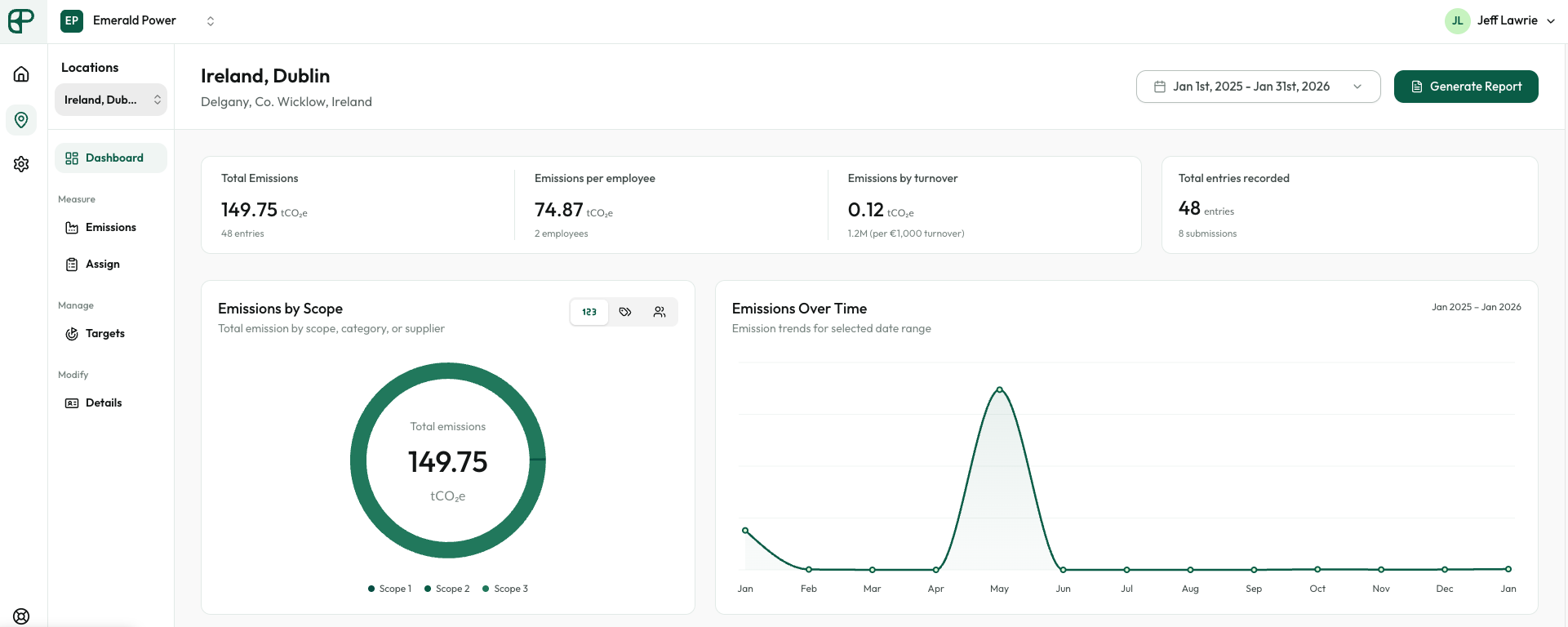
Emerald Power was built specifically for the Irish and UK SME and mid-market segment. That means the platform has been designed around the realities of businesses with lean sustainability teams (or none at all), complex Scope 3 supply chains, and an increasing need to produce reports that stand up to scrutiny from auditors, banks, and investors alike.
Three things set Emerald Power apart in this market: its genuinely intuitive platform that reduces the time-to-first-report dramatically; its advanced methodology that produces GHG Protocol-aligned, audit-ready figures from day one; and its expert support team — real sustainability specialists who work alongside you, not a chatbot pointing you to a help article.
Where Greenly can feel rigid when your reporting requirements evolve, Emerald Power scales with you. As your CSRD obligations grow, as your investors ask harder questions, and as your supply chain data becomes more complex, the platform is built to handle it — without requiring you to become a carbon accounting expert yourself.
Strengths
Purpose-built for SMEs and mid-market — not a scaled-down enterprise tool
GHG Protocol-aligned, audit-ready outputs from day one
Intuitive UI — minimal training required
Dedicated expert support team (humans, not bots)
Strong Scope 1, 2 & 3 coverage including supply chain
Designed for Irish & UK regulatory context
Limitations
Newer to market than some global incumbents
Less suited to very large multinationals needing global data centres
Bottom line: If you're an SME or mid-market company in Ireland or the UK looking for a platform that's easy to adopt, accurate enough to satisfy auditors, and backed by experts who actually pick up the phone — Emerald Power is the most natural fit on this list.
2. Normative
Best for: Science-driven mid-market organisations wanting deep carbon focus and verified methodology.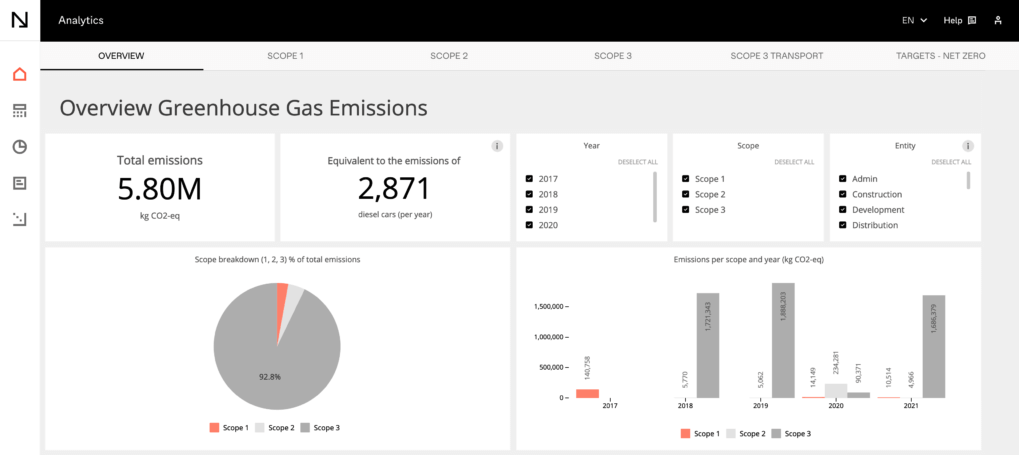
Normative is one of the original carbon accounting platforms, founded in Stockholm in 2014 and widely regarded as a pioneer in science-based emissions measurement. Its carbon accounting engine draws on over 330,000 emission factors from 20+ scientific databases, and its methodology has been independently verified by TÜV SÜD. For organisations that place methodology and scientific rigour at the top of their priorities list, Normative is a credible option.
Where Normative distinguishes itself is in the depth of its carbon focus. Unlike platforms that try to do everything across the ESG spectrum, Normative keeps its attention on Scope 1, 2, and 3 carbon accounting — and does it well. Climate Strategy Advisors are available to help teams interpret results and identify reduction opportunities, which is genuinely useful for companies without in-house sustainability expertise.
The limitation users most often flag is the volume of manual data entry required when feeding the platform your operational data. It can also feel narrow if your reporting requirements extend beyond carbon into broader ESG territory.
Strengths
TÜV SÜD verified methodology — credible for audits
Deep Scope 3 coverage across 20+ scientific databases
Climate Strategy Advisors included
Intuitive, regularly updated platform
GRI, CDP, Nasdaq ESG export formats
Limitations
Manual data entry heavier than some competitors
Carbon-only focus — weak if you need full ESG
Response times from support can be slow.
3. Sweep
Best for: Larger teams wanting to embed sustainability across departments and collaborate on emissions data.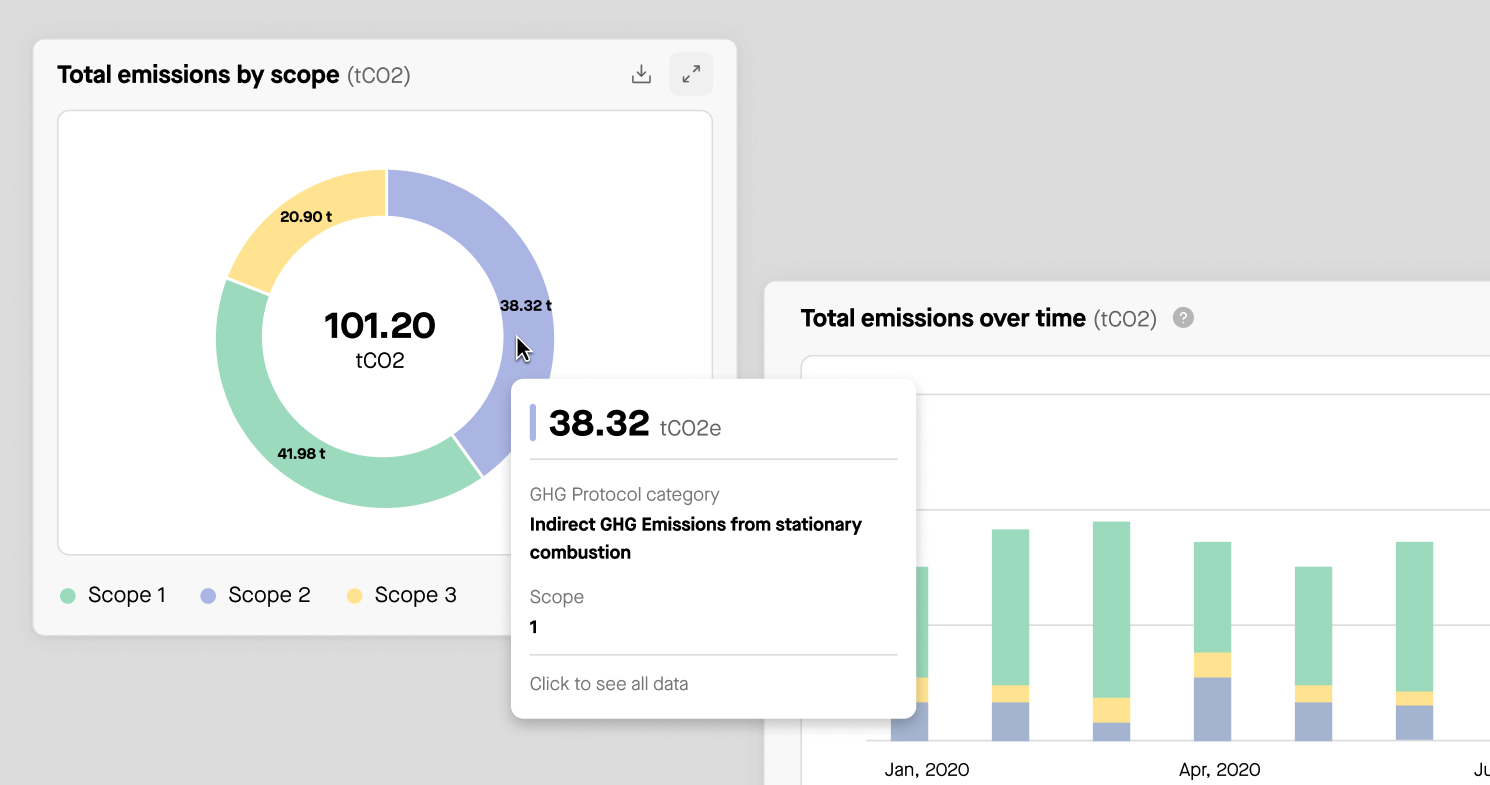
Sweep, founded in Paris in 2020, is a data platform built around the idea that sustainability has to become a team effort — not something that lives in one person's spreadsheet. Its standout feature is a highly collaborative environment where different departments can contribute data, track their slice of the emissions picture, and work toward shared reduction goals. It supports Scope 1, 2, and 3 and has strong scenario modelling capabilities.
Sweep is also a member of the World Bank's Carbon Pricing Leadership Coalition and has grown its client base significantly among larger European organisations. The platform's customisable dashboards and analytics offer considerable flexibility for teams that need tailored reporting outputs.
Where Sweep is less compelling is for smaller teams. The platform's depth can feel like overkill for an SME that just needs a clean, reliable carbon report without extensive configuration. It's built to scale, which means it may feel like more work to get up and running than a leaner alternative like Emerald Power.
Strengths
Excellent multi-department collaboration tools
Highly customisable dashboards and analytics
Strong Scope 3 supplier engagement features
Scenario modelling for reduction pathways
Flexible for organisations of varying sizes
Limitations
Can feel over-engineered for small teams
Setup and configuration can take time
Pricing typically leans toward larger deployments
Less expert-led support than some alternatives
4. Watershed
Best for: Large, data-heavy organisations with complex multi-category emissions across global operations
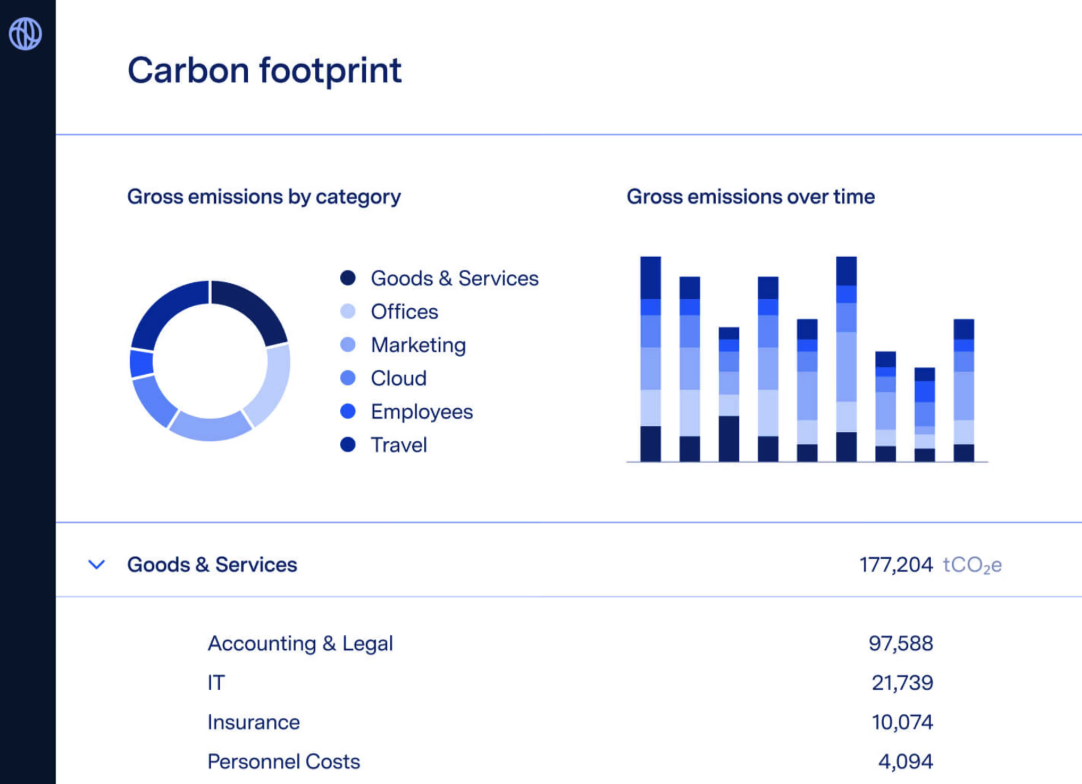
Watershed is a US-founded carbon management platform that has established itself as a serious enterprise-grade option, particularly for organisations managing vast quantities of emissions data across complex operations and global supply chains. It integrates a built-in emissions factor database to streamline Scope 3 reporting, and its ability to handle ESG disclosure alongside decarbonisation planning makes it attractive to large corporates with sophisticated sustainability functions.
The platform's strength is in scale and data depth. For enterprises managing complex emissions across multiple categories, Watershed's infrastructure holds up well. It supports science-based target setting and has growing capabilities around supply chain decarbonisation.
The honest caveat: Watershed is not built for SMEs. Its pricing, implementation timeline, and the level of internal resource required to get full value from it put it firmly in the large-organisation bracket. If you're a mid-market company or SME, the complexity and cost are likely to create more friction than value.
Strengths
Enterprise-grade data handling and scale
Strong Scope 3 with supplier engagement portals
Science-based target modelling
ESG disclosure and decarbonisation in one platform
Limitations
Not designed for SMEs — pricing and complexity reflect this
Significant internal resource required to manage
Long implementation timelines
US-centric origins — less tailored to European regulatory context
5. Plan A
Best for: European mid-to-large businesses wanting a dedicated carbon expert driving their reduction strategy
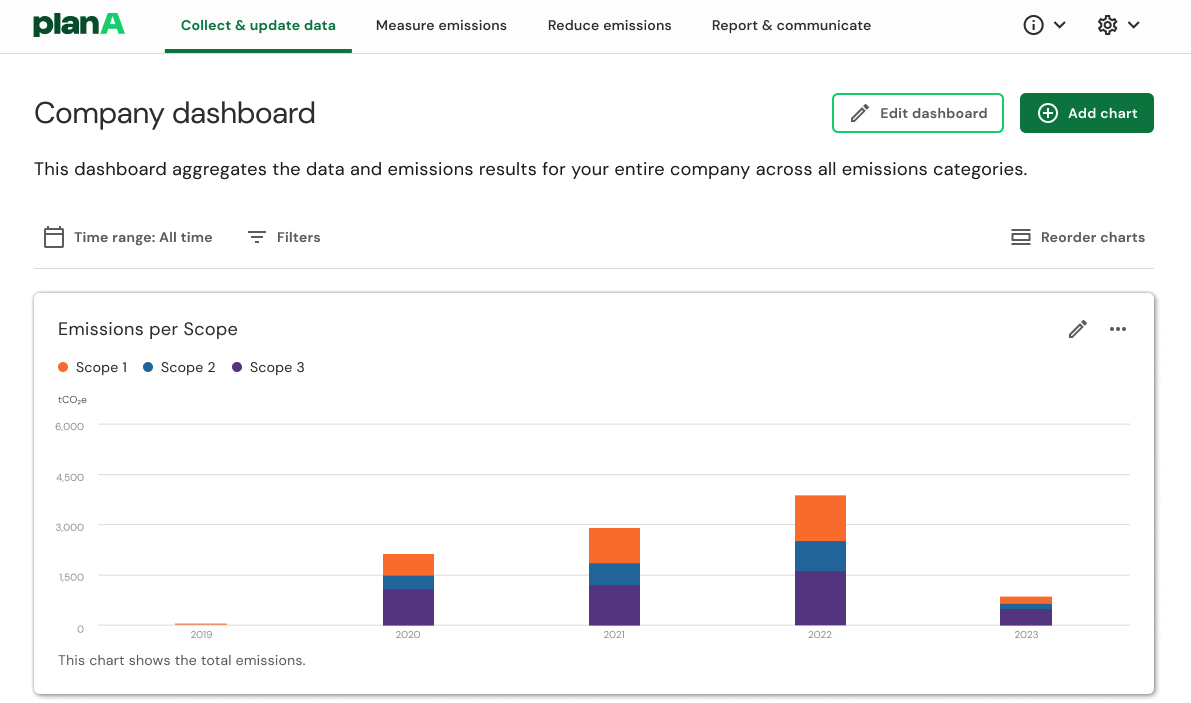
Founded in Berlin in 2017, Plan A goes further than measurement — it pushes businesses toward active emissions reduction. Each client is assigned a dedicated carbon accountant and policy expert who actively shapes their decarbonisation roadmap, not just the data entry. The platform covers Scope 1, 2, and 3 aligned with the GHG Protocol, and calculations are independently certified by TÜV Rheinland. High-profile clients include companies like BMW and Alphabet.
What Plan A does particularly well is combining platform with service. Rather than leaving customers to interpret their data alone, the dedicated expert model means businesses get strategic guidance baked into the engagement. For companies that are serious about their reduction journey and want an active partner, not just a software licence, Plan A is compelling.
The trade-off is cost and fit. Plan A's model is designed for organisations that can justify the investment in a dedicated expert resource, which tends to push it toward larger mid-market and enterprise clients rather than smaller SMEs.
Strengths
Dedicated carbon accountant assigned to each client
TÜV Rheinland certified calculations
Proactive decarbonisation strategy support
Strong European regulatory alignment (CSRD, GHG Protocol)
Limitations
Pricing reflects the premium service model
Better suited to mid-large than smaller SMEs
Platform can feel secondary to the advisory service
6. Persefoni
Best for: Financial services firms, asset managers, and large enterprises needing portfolio-level carbon analytics
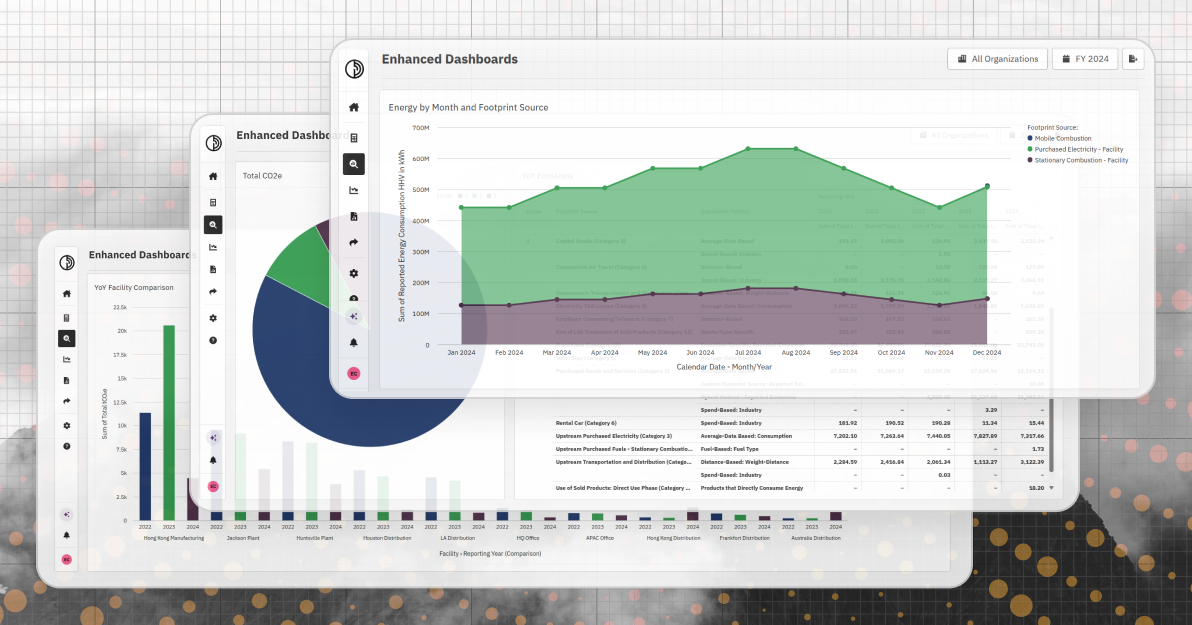
Persefoni has carved out a highly specialised niche in the carbon accounting world: financial services and investment management. If you're a bank, asset manager, or private equity firm needing to measure and disclose financed emissions, Persefoni is one of the most capable platforms in that category. It has been built with financial-grade auditability at its core, with a robust audit trail and support for frameworks like TCFD, PCAF, and SEC disclosures.
For general businesses, however, Persefoni is a significant over-specification. The platform's complexity, pricing, and the implementation effort required are calibrated for large organisations with dedicated sustainability and finance teams. SMEs and most mid-market businesses will find it difficult to justify either the cost or the internal overhead.
Strengths
Best-in-class for financed emissions and portfolio carbon
Financial-grade audit trail and compliance workflows
Strong TCFD, PCAF, and SEC framework support
Trusted by large financial institutions
Limitations
Not designed for non-financial businesses
Complex setup — steep learning curve
Enterprise pricing is prohibitive for SMEs
Overkill for standard CSRD or GHG Protocol reporting needs
7. Coolset
Best for: European mid-market companies prioritising CSRD compliance and a sustainable alternatives marketplace
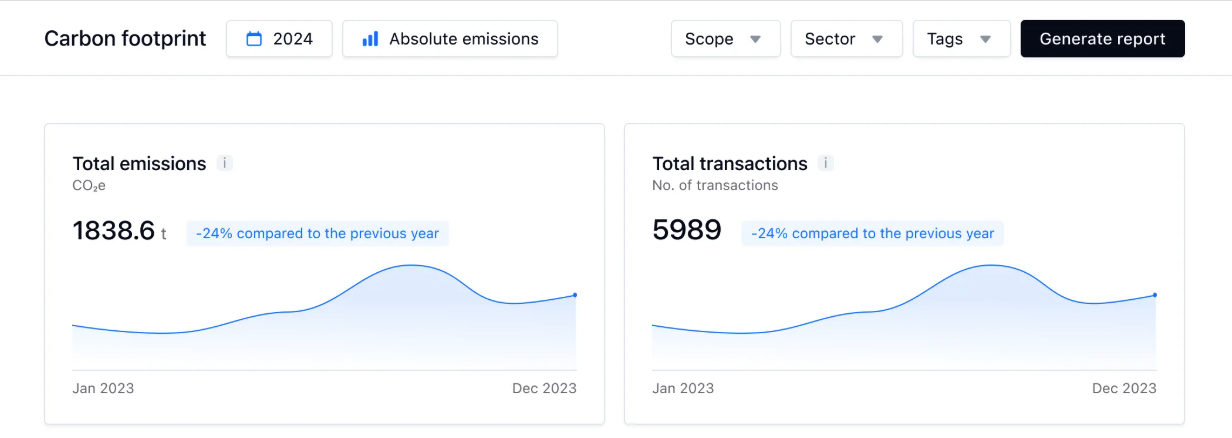
Coolset is a European carbon and ESG platform that has built a strong reputation among mid-market companies navigating CSRD requirements. It offers TÜV-certified Scope 1–3 measurement, CSRD and ESRS compliance tooling, and a built-in sustainable alternatives marketplace — giving businesses a route from measuring emissions to actually acting on them. The customisation options and reporting flexibility have been highlighted positively by users, and support quality is generally regarded as solid.
Coolset is a credible alternative for companies primarily concerned with CSRD readiness. It's less strong for businesses that need deep Scope 3 supply chain analytics or have particularly complex data environments. It's also less established than some of the older platforms on this list, which may be a consideration for organisations that require long-term vendor stability.
Strengths
TÜV-certified Scope 1–3 measurement
Strong CSRD and ESRS compliance workflow
Sustainable alternatives marketplace included
Good customer support quality
Helpful customisation and reporting options
Limitations
Newer platform — less proven at scale
Less suited to complex Scope 3 supply chain environments
Less name recognition than established players
8. IBM Envizi
Best for: Large enterprises needing enterprise-scale environmental data management integrated with broader IT infrastructure
IBM Envizi is an environmental data management platform designed for organisations that need to consolidate sustainability data at scale across large, complex structures. It supports data consolidation across multiple business units, integrates with broader enterprise systems, and covers multiple reporting frameworks. For very large organisations with significant existing IBM infrastructure, it can make sense as part of a wider enterprise technology stack.
IBM Envizi is emphatically not an SME or mid-market tool. The implementation complexity, the enterprise-level pricing, and the requirement for significant internal technical resource to configure and maintain it put it firmly beyond the reach and need of most growing businesses. It's included here for completeness — but if you're an SME or mid-market company reading this guide, it almost certainly isn't the right call.
Strengths
Enterprise-grade data consolidation at real scale
Integrates with existing IBM enterprise infrastructure
Multiple reporting frameworks supported
Trusted IBM brand and long-term vendor stability
Limitations
Not designed for SMEs — not even close
Steep learning curve and lengthy implementation
Requires significant internal technical resources
Enterprise pricing far beyond typical SME budgets
Choosing the Right Greenly Alternative
Every platform on this list solves a slightly different version of the carbon reporting problem. The right choice depends on your organisation's size, internal capacity, regulatory obligations, and how much expert support you want alongside the software.
Want a simple, audit-ready platform with expert support and SME pricing? → Emerald Power
Need deep scientific methodology and a narrow carbon focus? → Normative
Running a large team that needs cross-department collaboration? → Sweep
A large enterprise with complex global data? → Watershed or IBM Envizi
Want a dedicated carbon expert driving your reduction strategy? → Plan A
In financial services needing portfolio-level carbon data? → Persefoni
Focused specifically on CSRD readiness? → Coolset
But if you're a or mid-market company — the most common profile of a business currently outgrowing Greenly — Emerald Power is the platform that's been built with you specifically in mind. It's the only option on this list that combines genuine ease of use, audit-grade accuracy, and hands-on expert support at a price point that makes sense for businesses at your scale.
Ready to See Emerald Power in Action?
Book a 30-minute demo with our team. We'll walk through your current reporting setup, show you exactly how Emerald Power handles your specific data and framework requirements, and give you an honest view of whether we're the right fit.